What Are the Olympic Lifts and Should You Do Them?
Olympic lifts are the only weightlifting exercises athletes perform and compete in at the Olympic games, hence the name Olympic weightlifting. Three exercises are considered olympic lifts: snatch, clean and jerk. These are compound free weight exercises, but unlike simpler exercises like squats and deadlifts which consist of a single concentric and eccentric phase of the working muscles accompanied with isometric work of the stabilizers, olympic lifts involve multiple muscle group changing their type of contraction two or more times throughout the lift.

Examples: In the first portion of the snatch or clean quadriceps are working concentrically to lift the bar, while hip muscles are working isometrically to maintain upright posture, but when the bar reaches the knee level the direction changes and hip muscles now work concentrically while quadriceps are lenghtened eccentrically. Similarly, after final upward concentric action of quadriceps, hip and back muscles they are eccentrically lenghtened to lower the lifter into a squat while hip and knee flexors which were previously eccentrically lenghtened now have to contract concentrically.
Since efficient execution requires precise, rapid and sharp changes in velocity, Olympic lifts are the most effective way for training explosive strength (also called power). Power is defined as the time rate of doing work or in our context, measuring power means measuring how much time it takes for us to create very high force. And improving power means reducing that time. This is the reason why olympic lifts are prescribed to athletes trying to improve their vertical jump height or speed in movements that require hip and knee extension (e.g sprinting, ice skating, wrestling, judo).
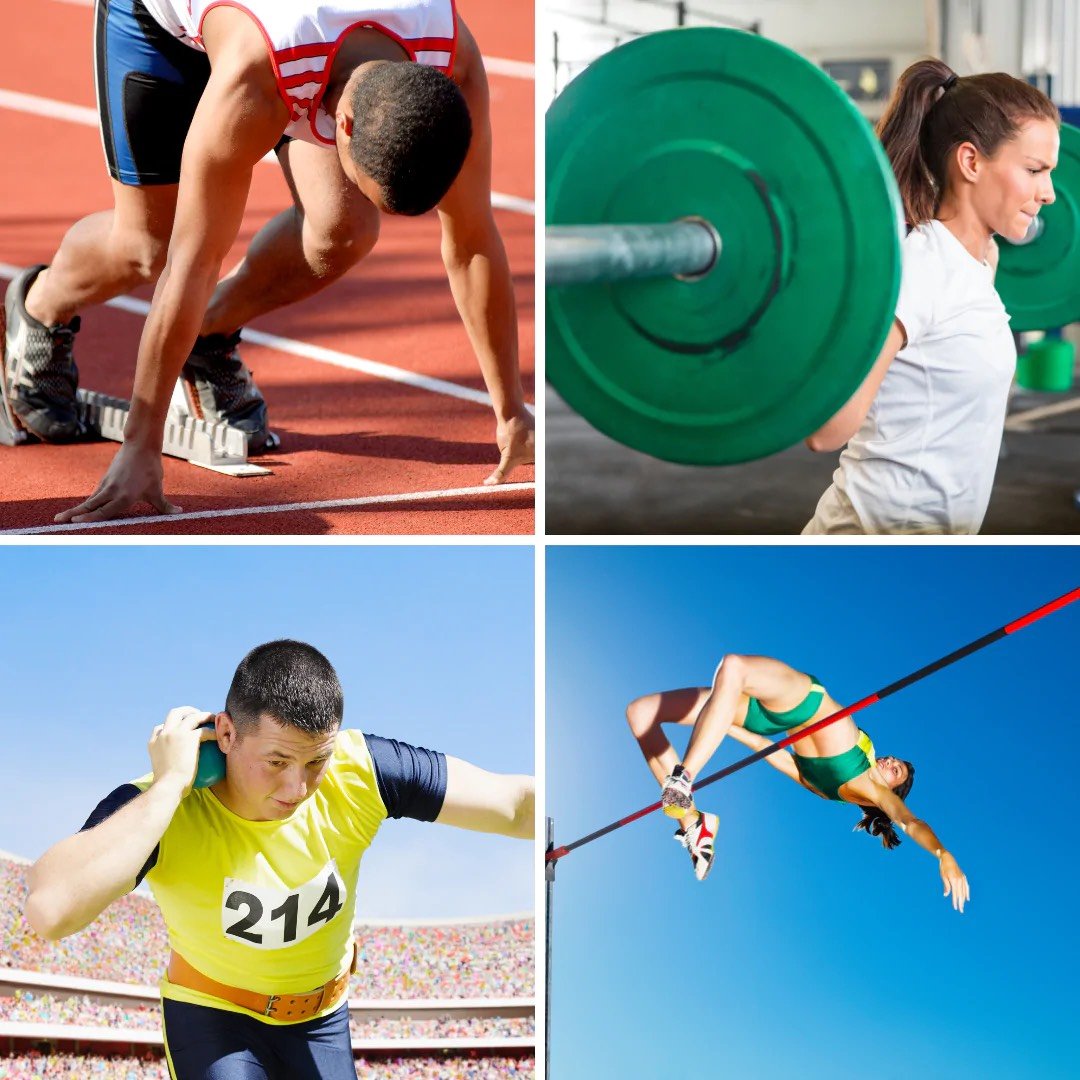
Other Benefits of training Olympic Lifts:
- The whole body is trained in a single movement
- Many People find olymlic lifts more enjoyable and engaging than conventional strength/power exercises
- Olympic lifts tax your body with the greatest possible weight at the fastest possible manner. This provides much stronger stimuli for improving bone mineral density than any other type of activity
- Olympic lifts require you to control free weights through a great range of motion which directly translates as improved stability, coordination, motor control and reflexes.
- In Contrast to common strength exercises like bench press or deadlifts, olympic lifts can lead to mobility improvements
However, mastering proper olympic lifting technique requires coaching and consistent feedback from an experienced coach. Programming the olympic lifts is also fairly complex and requires the skill to notice errors, and knowledge of exercise selection for fixing them, but also physiological responses to different training protocols and how to manipulate training variables to elicit desired adaptations.
Additionally, if you have mobility restrictions that prevent you from executing olympic lift in their basic positions there are variations of the lifts themselves or similar movements you can still do and, depending on the severity of underlying problem, mobility drills that will help you gain range of motion with time.