
WEIGHTLIFTER VS POWERLIFTER VS CROSSFITTER – Structural Differences of Our Brain
When we think of a weightlifter we see someone strong but not too bulky, agile, explosive and coordinated. When we think of a powerlifter we picture someone very big and strong but somewhat slower. When we hear the word CrossFitter we see a skillful, versatile person with a nimble but not necessarily explosive body. While differences in hypertrophy type, fiber composition, and muscle architecture all play a role in shaping these sport-specific adaptations, an equally important factor is neural adaptations. And not just peripheral ones — our brains themselves undergo structural change due to the neuroplasticity of our nervous system.
CNS Adaptations in Power Training
Movements like snatch, clean, jerk, push press, jump squat, and sprint require simultaneous activation and precise coordination of many muscle groups. Even though these power movements demand many muscles firing together in sequence, they don’t require maximal activation of each muscle. Instead, only some neurons for each muscle are recruited, and because neurons that fire together wire together, networks form between neurons controlling different muscles. The outcome: neurons across multiple muscles fire synchronously, but the neurons of each individual muscle fire asynchronously. In other words, the weightlifter excels at producing large amounts of force in a learned sequence, but not at maximally activating each muscle in isolation.
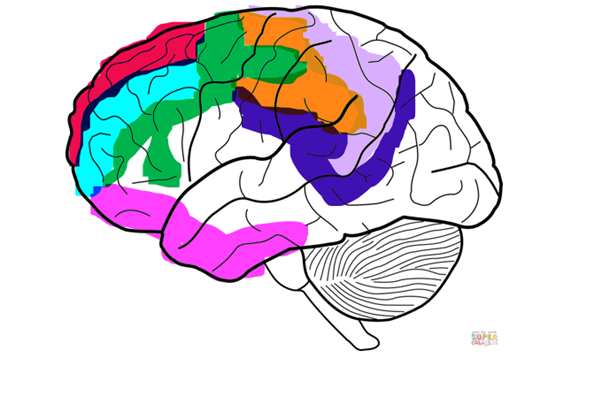
Illustrative representation of neural connections in a weightlifter’s brain.
CNS Adaptation in Strength Training
Movements like squat, deadlift, bench press, and strict press require far fewer muscles to be activated together and almost no sequential activation (all necessary muscles activate from the start). However, these lifts demand very high to maximal voluntary drive. During strength movements, nearly all neurons for the involved muscles are recruited. With repeated practice, these neurons reinforce their connections, leading to large cortical maps for each prime mover while inter-muscle connections are pruned away. The result is synchronous firing within each muscle, but asynchronous firing between different muscles. In other words, the powerlifter is highly efficient at maximally activating individual muscles, but coordination across muscles is not their strongest trait.
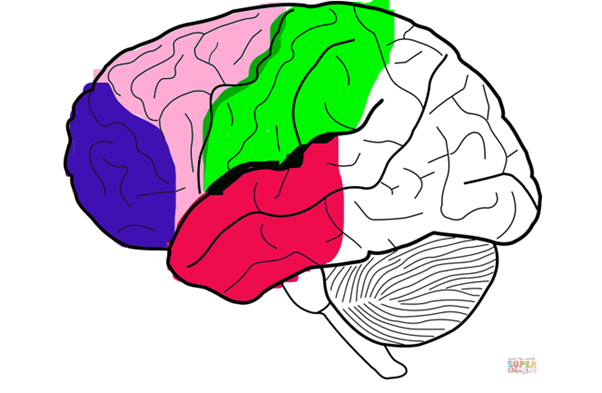
Illustrative representation of neural connections in a powerlifter’s brain.
CNS Adaptations in Metabolic Training
CrossFit includes versatile movements and very rapid transitions between exercises. After performing one movement, the athlete quickly switches to another, causing overlapping neural activation between successive tasks. Because neurons that fire together wire together, this overlap strengthens connections between neurons controlling different muscle groups used one after another. This explains why many CrossFitters report it is easier to keep workout sequences the same rather than randomizing them. Essentially, the CrossFitter begins pre-activating muscles needed for the next exercise during the current one. The trade-off: their movement patterns are less consistent and their ability to maximally activate a single muscle is limited, since brain connections are more widely dispersed rather than concentrated into specialized zones for habitual movement patterns.
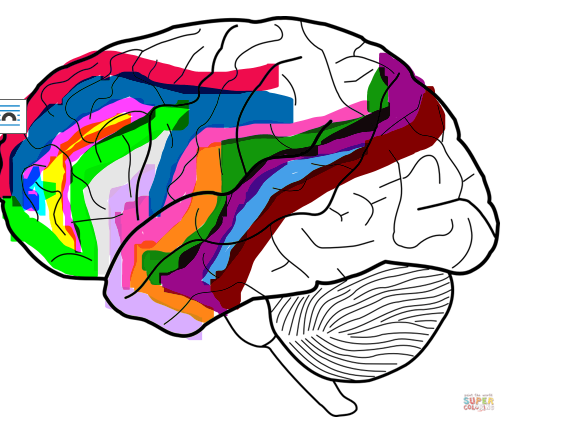
Illustrative representation of neural connections in a CrossFitter’s brain.
To be clear, these descriptions represent ends of a continuum. It is the types of movements we perform most often that shape neural connections, not simply how we identify. Still, understanding how different training modalities reshape the brain is a powerful tool for directing performance in the desired direction.